Horse boarding and care services
Choosing a board type is really choosing how much of the daily work you want to do and how your horse lives best. A hard-keeping senior, a show horse in five-day-a-week work, and a sound trail gelding all deserve different answers, and the most expensive option is not automatically the right one.
Below is what each service actually involves. If you are not sure, call and describe your horse's week — feed, turnout, workload, and any medical history. That conversation takes ten minutes and saves people from picking the wrong board and moving barns twice.
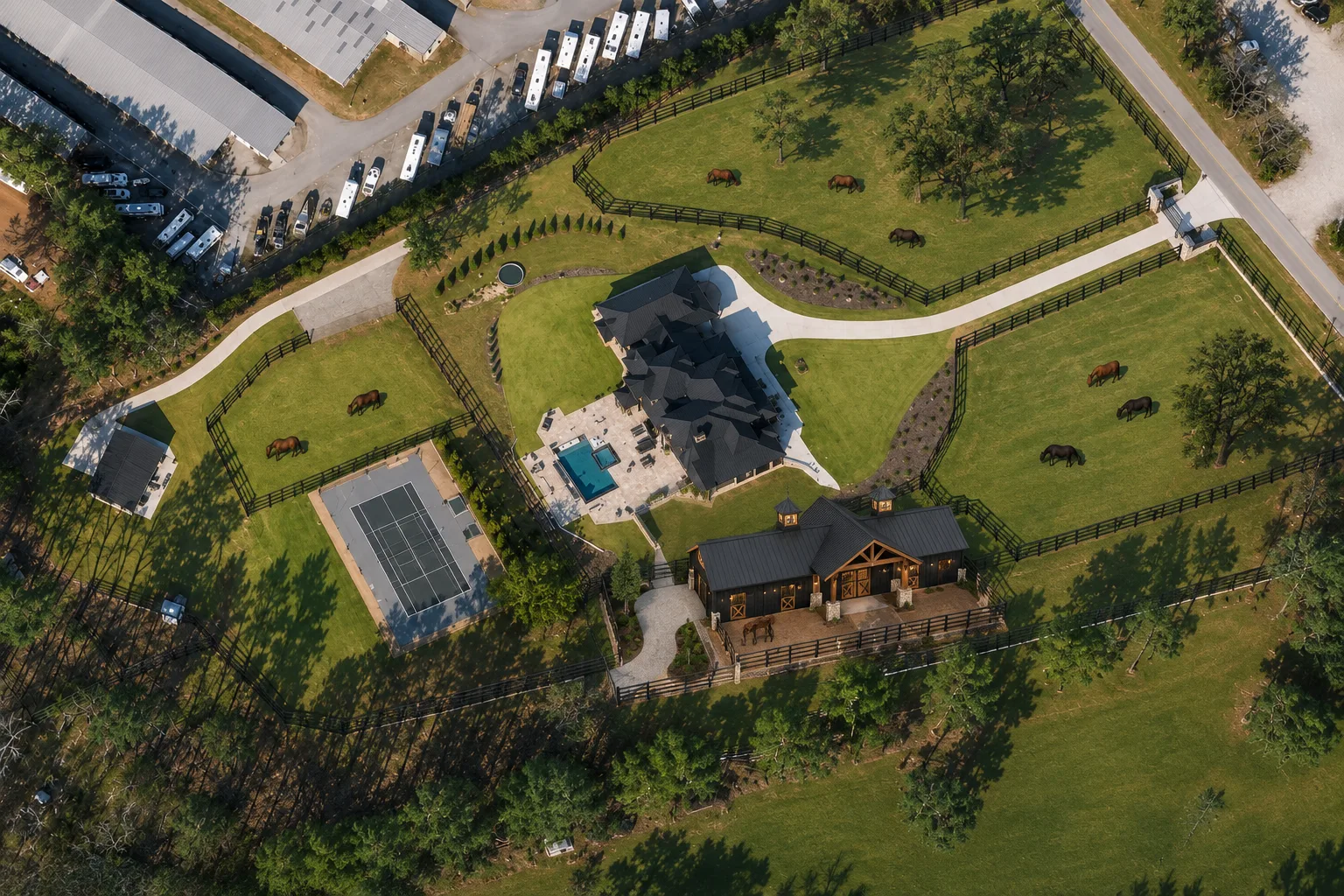
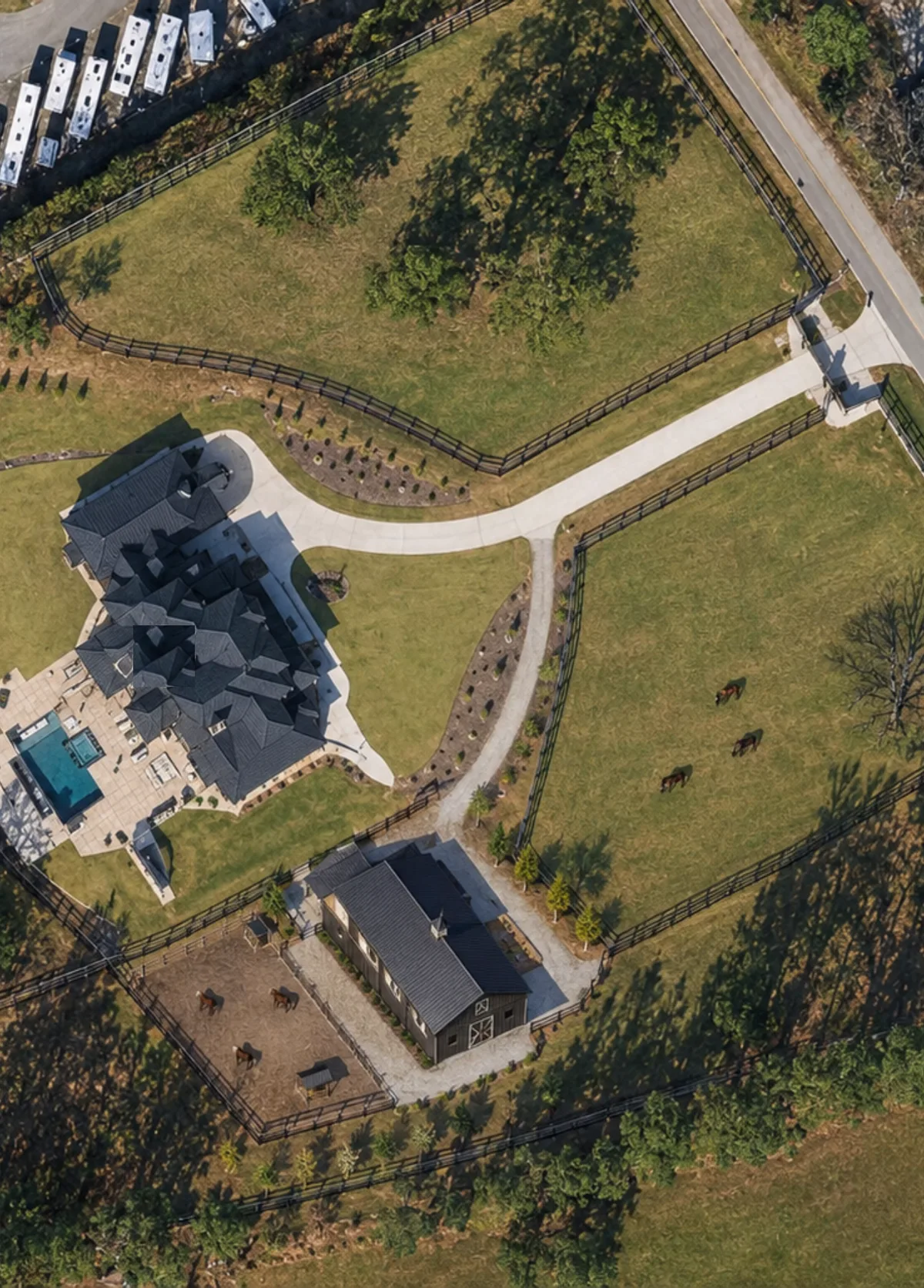
The barn and property your horse would live on
Our farm at 5750 Holiday Rd in Buford — the barn, the board-fenced pastures, and the turnout, shot from the air so you can see the whole layout before you visit.
What every board type here includes
Regardless of which option you choose, some things do not vary. Fresh water in volume. Safe fencing and gates that get checked, not assumed. Daily turnout, adjusted by season — nights in the worst of the summer heat, days through winter. Forage available appropriate to the horse, because most horses need hay and grass far more than they need a bigger scoop of grain. And a person laying hands and eyes on every horse every day.
Those are the parts of horse keeping that quietly decide outcomes. Arena footing and a nice tack room are pleasant; water, fencing, forage, and daily observation are what keep a horse healthy and out of the clinic.
Costs, honestly
We do not publish board rates, and you should be a little skeptical of barns that do. Real pricing depends on care level, turnout arrangement, feed and supplement program, and whether your horse needs anything unusual — soaked feed, timed medication, solo turnout, or blanket-heavy management. A number on a webpage either has to be padded to cover the worst case or gets revised on the phone anyway.
Call 404-738-6120, describe your horse in about five minutes, and we will give you a figure that will still be the figure when you sign.
Full-Care Boarding
Daily feeding, turnout, stall cleaning, and hands-on monitoring — everything handled for you.
Details →Partial-Care Boarding
You keep a hands-on routine and split daily chores; we cover the rest at a lower monthly rate.
Details →Pasture Board
24/7 turnout with shelter, hay, and water for horses that do better living out.
Details →Stall Board
A dedicated stall with daily turnout for horses in work or on a managed routine.
Details →Retirement Board
Quiet, low-stress care for senior and pasture-sound horses stepping out of work.
Details →Horse Training
Groundwork, restarts, and consistent under-saddle work built around your horse.
Details →Riding Lessons
Lessons for new riders and returning riders who want a safe, steady foundation.
Details →Horse Trailering & Transport
Local hauling for vet visits, clinics, shows, and moving day across North Georgia.
Details →How to choose between board types
Start with your schedule, not your budget
The cheapest board is only cheap if you can actually keep up with your side of it. Partial care saves money and costs time; full care costs money and buys certainty. Owners with unpredictable jobs almost always end up happier on full care.
Then look at how your horse lives best
Many sound horses do better living out on pasture board than standing in a stall. Horses in consistent work, on controlled feed, or clipped through winter usually need stall board. Horses stepping out of work belong on retirement board, where the whole program is built around comfort.
Then add what your horse needs from people
If your horse needs manners, a restart, or help loading, add training. If you are building your own skills, add lessons. If you do not own a trailer, local hauling covers vet trips and shows.
We serve Gwinnett, Hall, and Forsyth County and the north Atlanta metro.