Stall Board with Daily Turnout
A stall is a management tool. Used well, it lets you control feed intake, keep a clipped horse dry, medicate on a schedule, protect a rehabbing leg, and have a horse clean and ready when you arrive after work. Used badly — as a place a horse stands twenty-three hours a day — it causes ulcers, stocking up, stall walking, and cribbing.
So stall board here always comes paired with turnout. The stall is where a horse eats, rests, and rides out bad weather. The field is where he spends real hours.
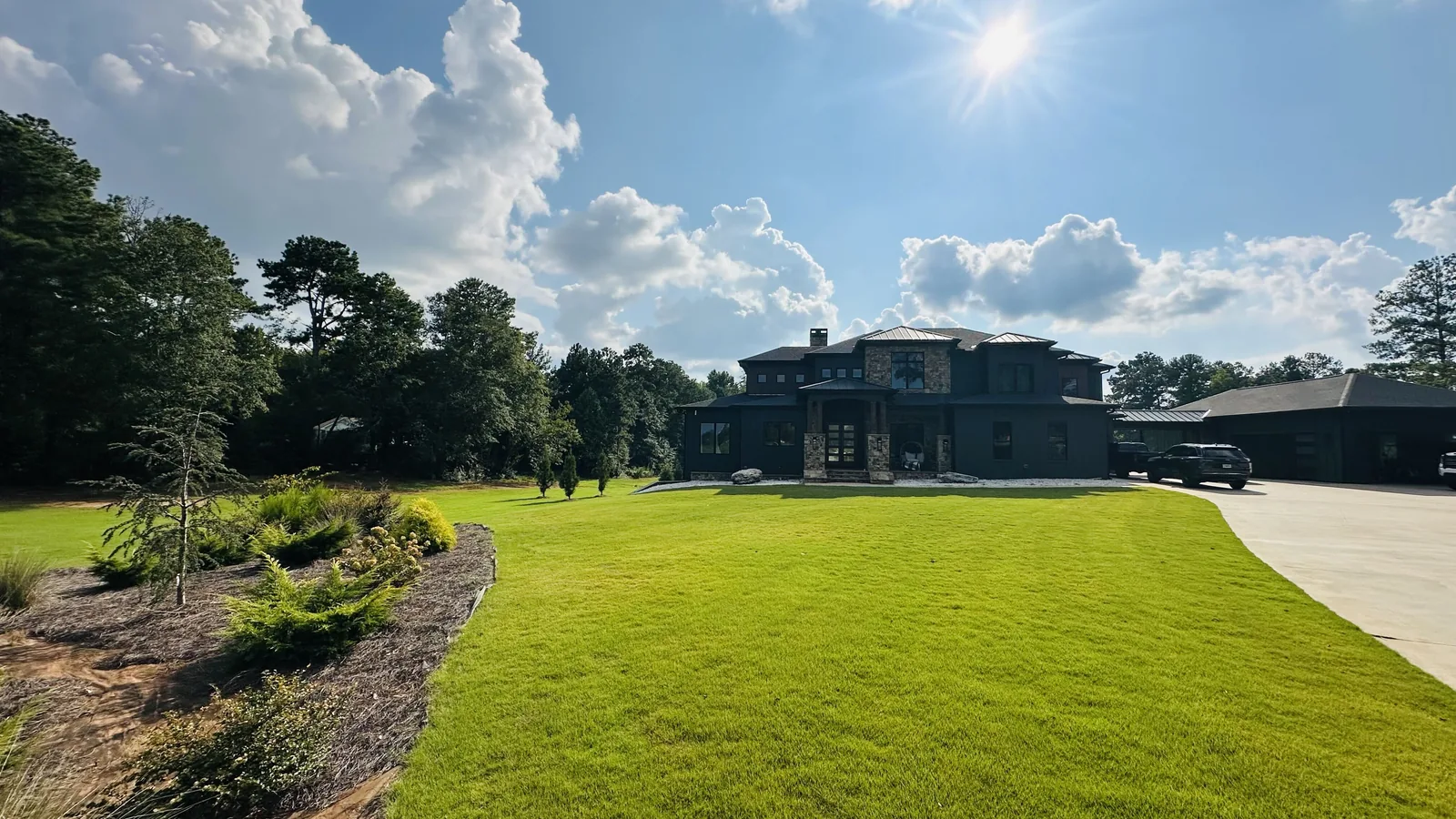
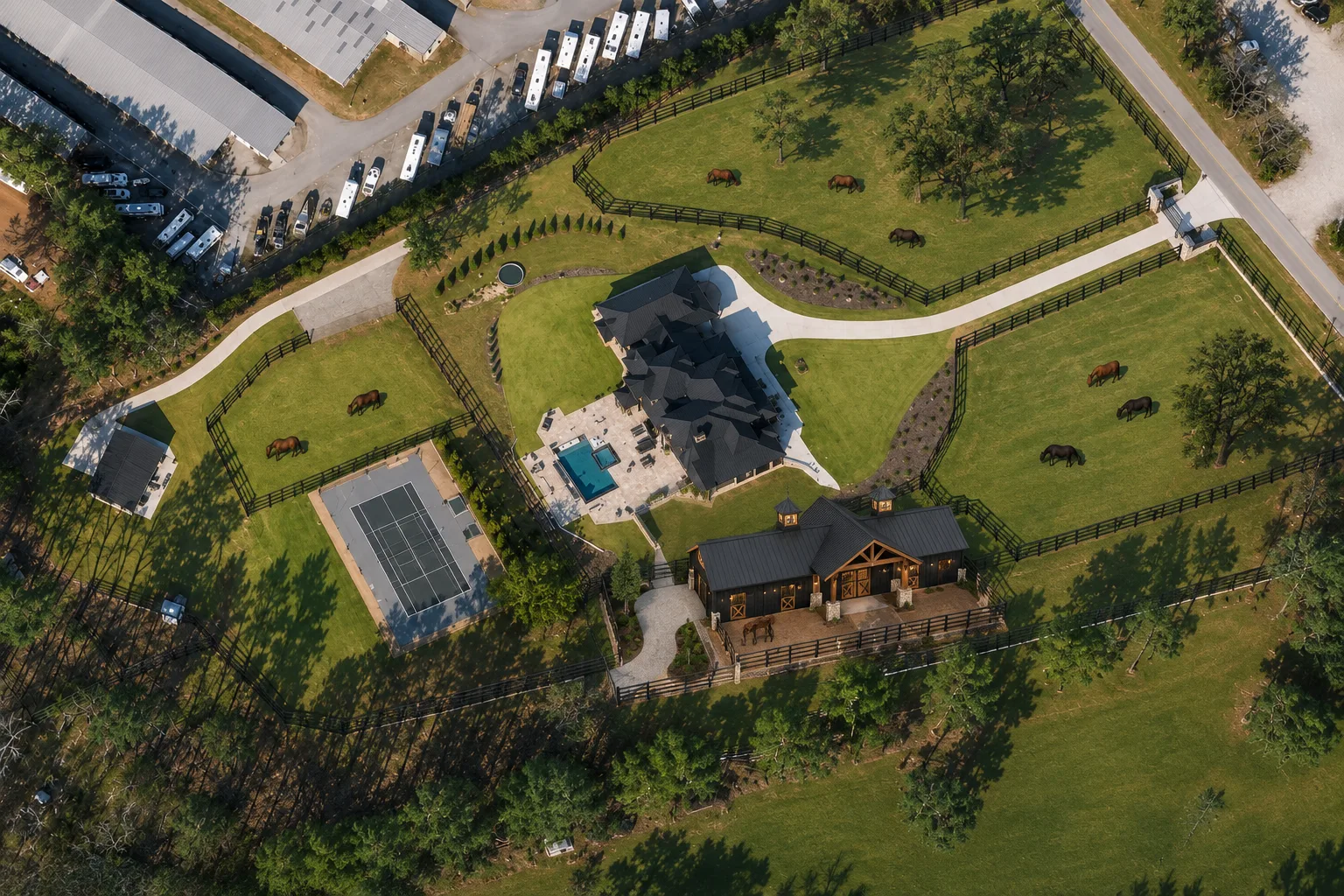
The barn and property your horse would live on
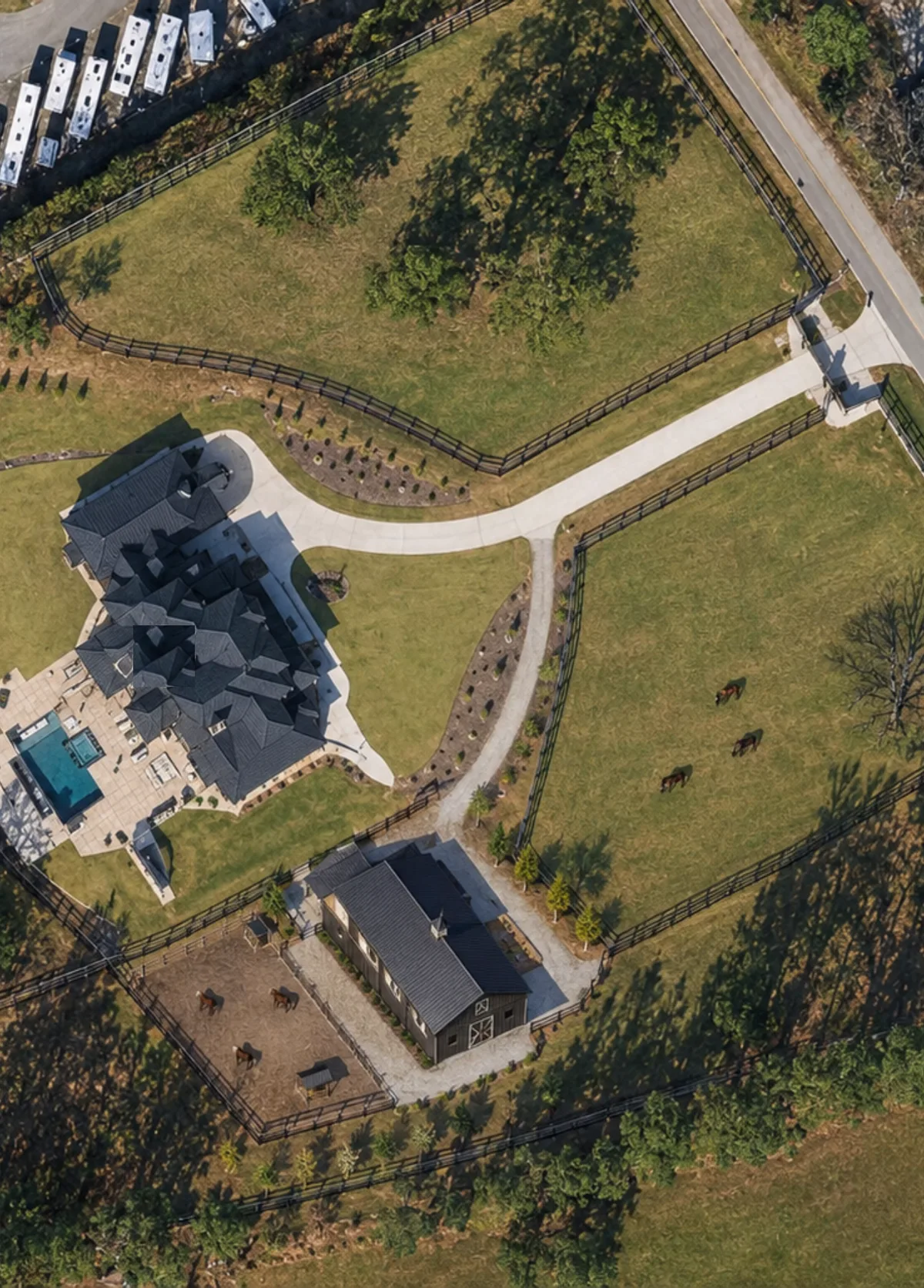
Our farm at 5750 Holiday Rd in Buford — the barn, the board-fenced pastures, and the turnout, shot from the air so you can see the whole layout before you visit.
What stall board includes
A dedicated stall cleaned daily with fresh bedding, feed and hay on your horse’s program, clean water, daily turnout, and a daily health check. Blanket changes as the weather shifts, and holding for the farrier and vet.
Practical things matter as much as the stall itself: safe latches a clever horse cannot work open, mats and bedding deep enough for a horse to lie down, airflow that moves ammonia out, and lighting good enough to actually see a horse at 6 a.m. in December.
How much turnout does a stalled horse need?
As much as his soundness and the footing allow — daily, not "when we can get to it." Even horses in heavy work do better with hours out, and horses who go from stall to arena and back are the ones who develop the classic stall vices.
In summer that often means night turnout, which sidesteps the worst of the heat and the flies. In winter it flips back to daytime. A barn that adjusts turnout by season is thinking about horses; a barn with one fixed schedule year-round is thinking about staffing.
Good candidates for stall board
Show and performance horses on a consistent program. Clipped horses through winter. Horses needing controlled feed intake, including metabolic horses on restricted grass. Horses on medication or a rehab plan. And older horses that need to be able to get out of the weather at will.
If your horse is sound, easy, and happier outside, do not pay for a stall out of habit. Pasture board may genuinely be the better and cheaper answer, and we will tell you so.
Stall board and the rest of your program
Most stall boarders are also riding regularly, which means the barn is part of your training routine, not just housing. If you want work put on your horse between your own rides, ask about training. If you are building your own riding skills, lessons pair naturally with a stall spot.
For clinics, shows, and vet appointments, local hauling is available so a missing trailer never costs you an entry.
Ask about a stall
Stalls are the most limited kind of space at any barn, and they fill first. Our barn is under construction now and we are talking with owners ahead of opening — call 404-738-6120 to ask where things stand, or send us your horse’s details.
Frequently asked questions
Can I use my own feed and supplements?
Yes. Owner-supplied feed and supplements are normal; we follow the program you set and flag anything that looks off.
Is my horse turned out alone or in a group?
It depends on the horse. Some horses need a solo paddock, most do better with a compatible companion or small group. We match by temperament, not by convenience.
Do you hold horses for the farrier and vet?
Yes, that is part of the service so you do not need to take time off work for a routine trim.
Where we offer stall board
Available to horse owners across Gwinnett County, Hall County, and Forsyth County, plus the wider Atlanta metro.
Other services
- Full-Care Boarding — Daily feeding, turnout, stall cleaning, and hands-on monitoring — everything handled for you.
- Partial-Care Boarding — You keep a hands-on routine and split daily chores; we cover the rest at a lower monthly rate.
- Pasture Board — 24/7 turnout with shelter, hay, and water for horses that do better living out.
- Retirement Board — Quiet, low-stress care for senior and pasture-sound horses stepping out of work.
Still deciding? Our boarding FAQ covers the questions owners ask most, and about us explains how we work.