Pasture Board in Gwinnett, Hall & Forsyth County
There is an old assumption that a stall is an upgrade and a field is a compromise. For a lot of horses it is the other way around. Movement is what keeps a gut working, a hoof landing evenly, and a mind settled. A horse that walks a few miles a day picking through grass is doing something no stall can replicate.
Pasture board is not "cheap board." Done properly it takes more land management, not less: rotation so the grass gets a rest, mowing and weed control, shelter that actually blocks the weather, and water that keeps flowing when the temperature drops.
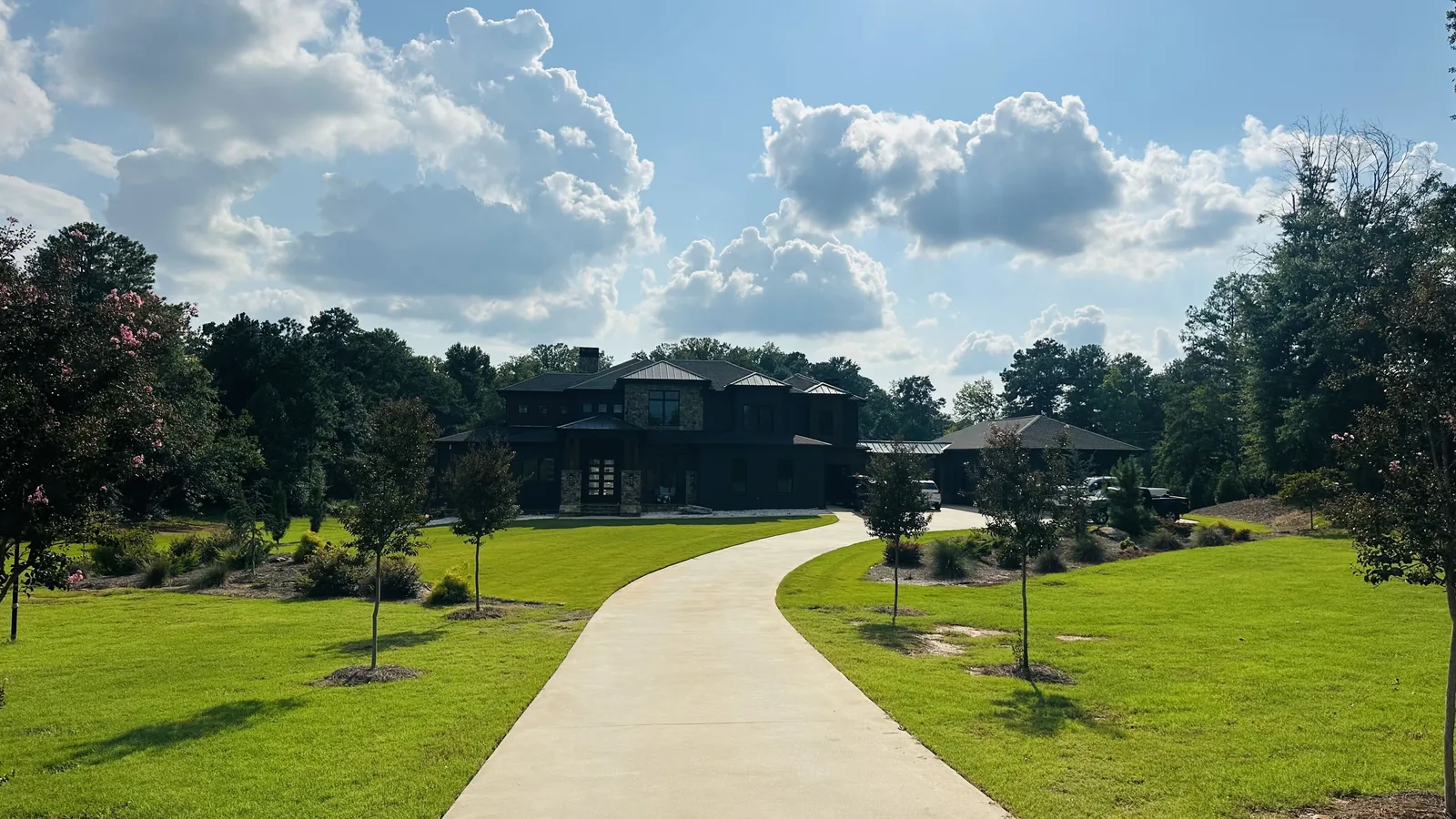
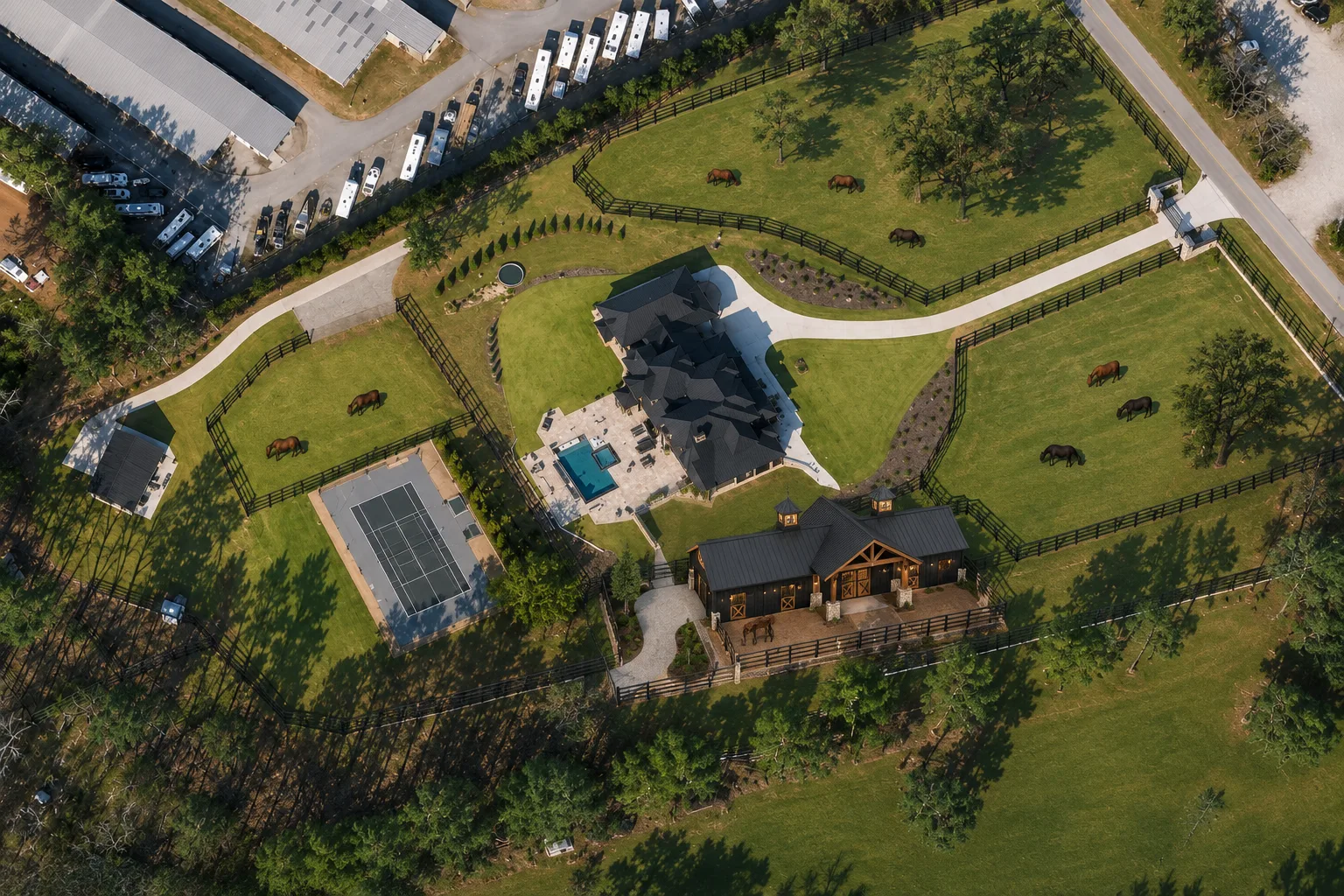
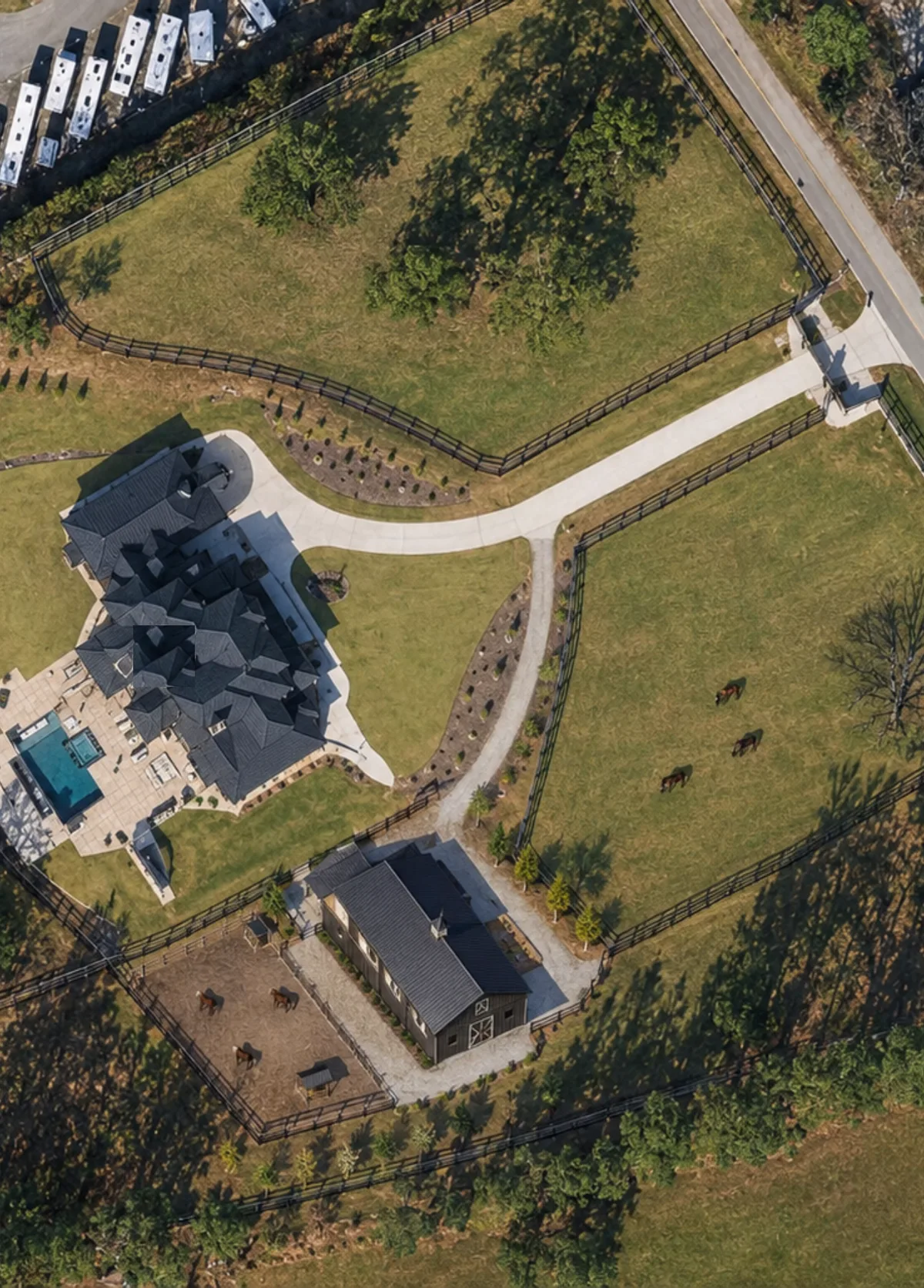
The barn and property your horse would live on
Our farm at 5750 Holiday Rd in Buford — the barn, the board-fenced pastures, and the turnout, shot from the air so you can see the whole layout before you visit.
What good pasture board includes
Shelter your horse can actually use — open on the right side, big enough that a low horse in the pecking order is not trapped in a corner. Hay when the grass is not carrying the herd, which in Georgia is most of the winter and again in a dry August. Clean water in volume. Safe fencing with no wire ends, no loose boards, and gates that latch every time.
And a daily set of eyes. Living out does not mean unsupervised. A horse in a field can get a fence cut, an abscess, or a case of rain rot exactly like a stalled horse can, and the difference between a small problem and a vet emergency is often who noticed it on day one.
Georgia weather and living out
Our climate is easier on turnout than most of the country — no deep snow, no month of subzero mornings. The challenges here are different: summer heat and humidity, biting insects, storm exposure, and stretches of rain that turn a gate area into mud.
That shapes how the fields get managed. Shade matters as much as shelter from June through September. Fly control is a real, recurring job. High-traffic areas around gates and water need footing that does not become a bog after three days of rain. Getting those details right is most of what separates a good pasture from a big fenced yard.
Which horses do well on pasture board
Sound horses, easy keepers, sensible herd members, retirees, young horses growing up, and plenty of horses in light to moderate work. Many owners are surprised how much a stiff older horse improves after a few months of living out.
Which horses do not: horses on stall rest, horses that will not tolerate a herd, some hard keepers who get pushed off hay, thin-skinned horses in fly season without management, and horses on medication that has to hit an exact clock. For those, stall board or full care is a better answer.
Herd introductions
The riskiest week of pasture board is the first one. New horses get introduced gradually — over a fence line first, then with a compatible companion, then into the larger group — and watched closely while the pecking order sorts itself out.
Rushing that step is how horses come home with hock injuries. We would rather take a slow week than explain a fast one to your vet.
Ask about pasture availability
Field space is finite, and good pasture management means capping numbers rather than squeezing in one more horse. Call 404-738-6120 to ask what is open, or send us your horse’s details.
We work with owners throughout Gwinnett, Hall, and Forsyth County, and can handle hauling on moving day if you do not have a trailer.
Frequently asked questions
Is pasture board safe in winter here?
Yes, with shelter, adequate hay, and unfrozen water. Horses handle Georgia cold well when they can move, eat, and get out of the wind and rain.
Will my horse still get individual attention?
Yes — daily checks, feed if your horse is on a ration, and hands-on handling. Living out changes the housing, not the care standard.
What if my horse does not settle into the herd?
We move him. Some horses need a smaller group or a single companion, and forcing it is not worth the risk.
Where we offer pasture board
Available to horse owners across Gwinnett County, Hall County, and Forsyth County, plus the wider Atlanta metro.
Other services
- Full-Care Boarding — Daily feeding, turnout, stall cleaning, and hands-on monitoring — everything handled for you.
- Partial-Care Boarding — You keep a hands-on routine and split daily chores; we cover the rest at a lower monthly rate.
- Stall Board — A dedicated stall with daily turnout for horses in work or on a managed routine.
- Retirement Board — Quiet, low-stress care for senior and pasture-sound horses stepping out of work.
Still deciding? Our boarding FAQ covers the questions owners ask most, and about us explains how we work.