Partial-Care Horse Boarding in North Georgia
Partial care is for the owner who wants to be at the barn anyway. If you are already driving out five or six days a week, paying someone else to pick your stall can feel like paying for something you enjoy doing.
The arrangement only works when the split is written down and both sides keep to it. Vague partial-care deals are where boarding relationships go bad — not because anyone is difficult, but because "I thought you were feeding tonight" is a genuinely dangerous sentence around horses.
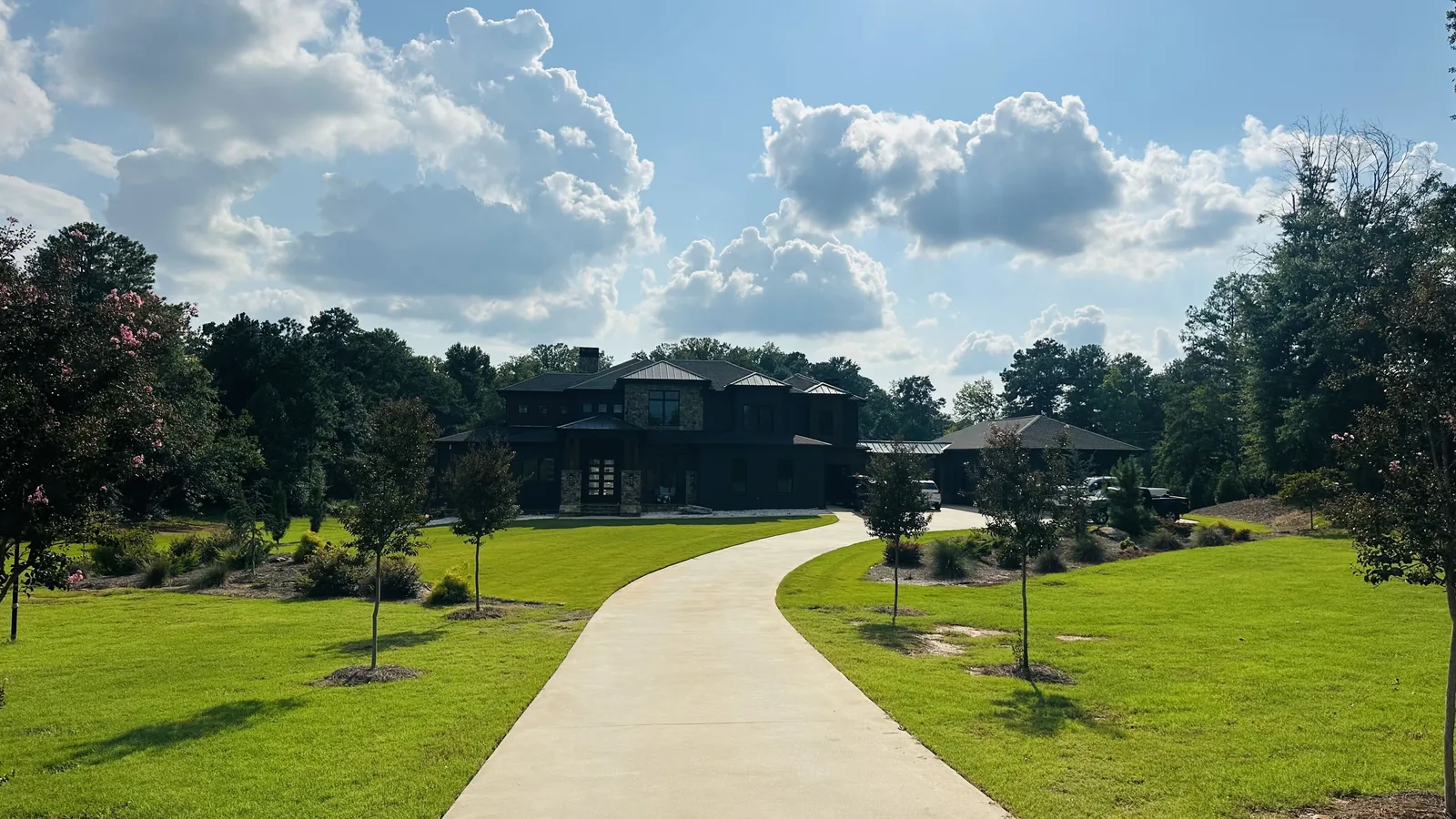
The barn and property your horse would live on
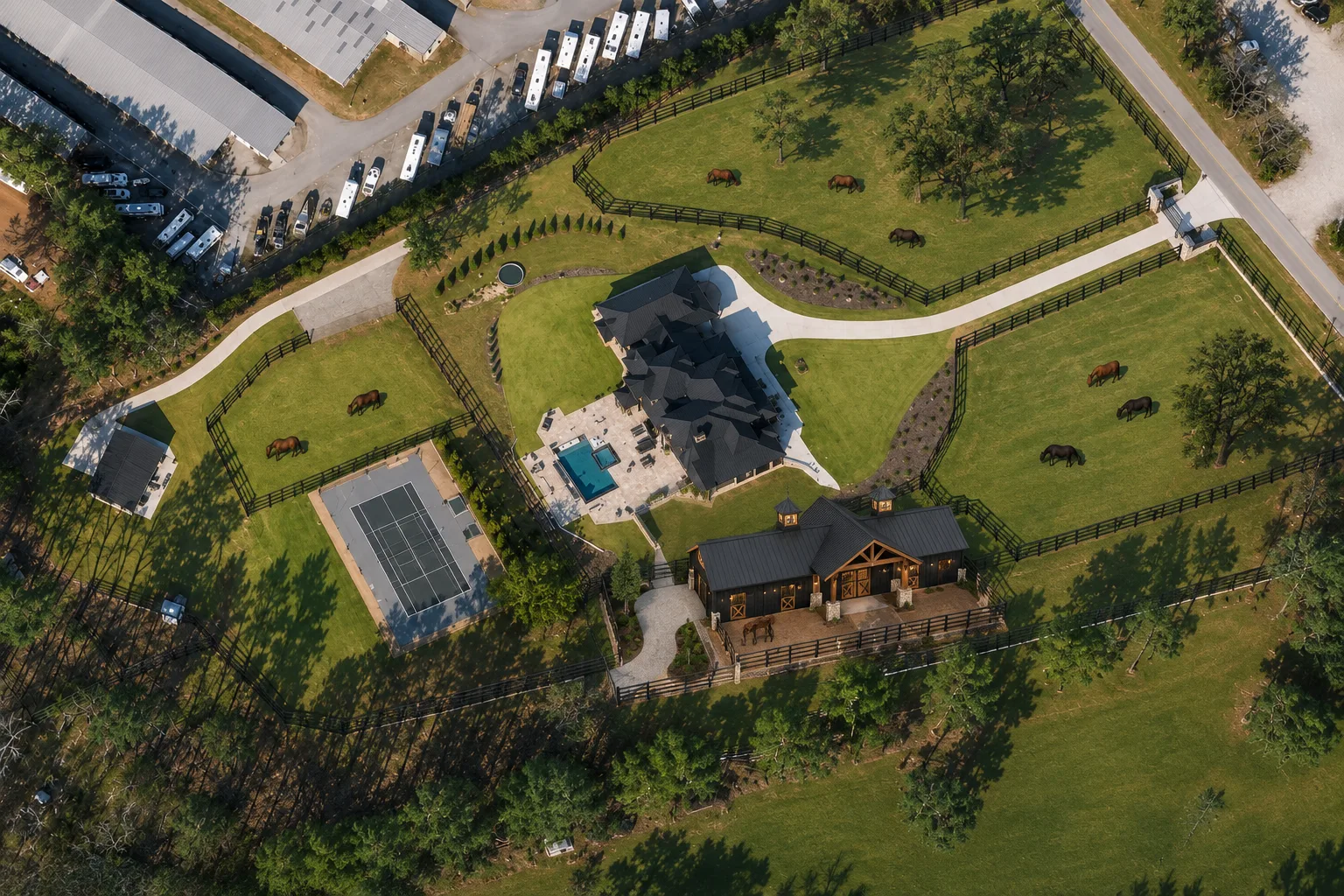
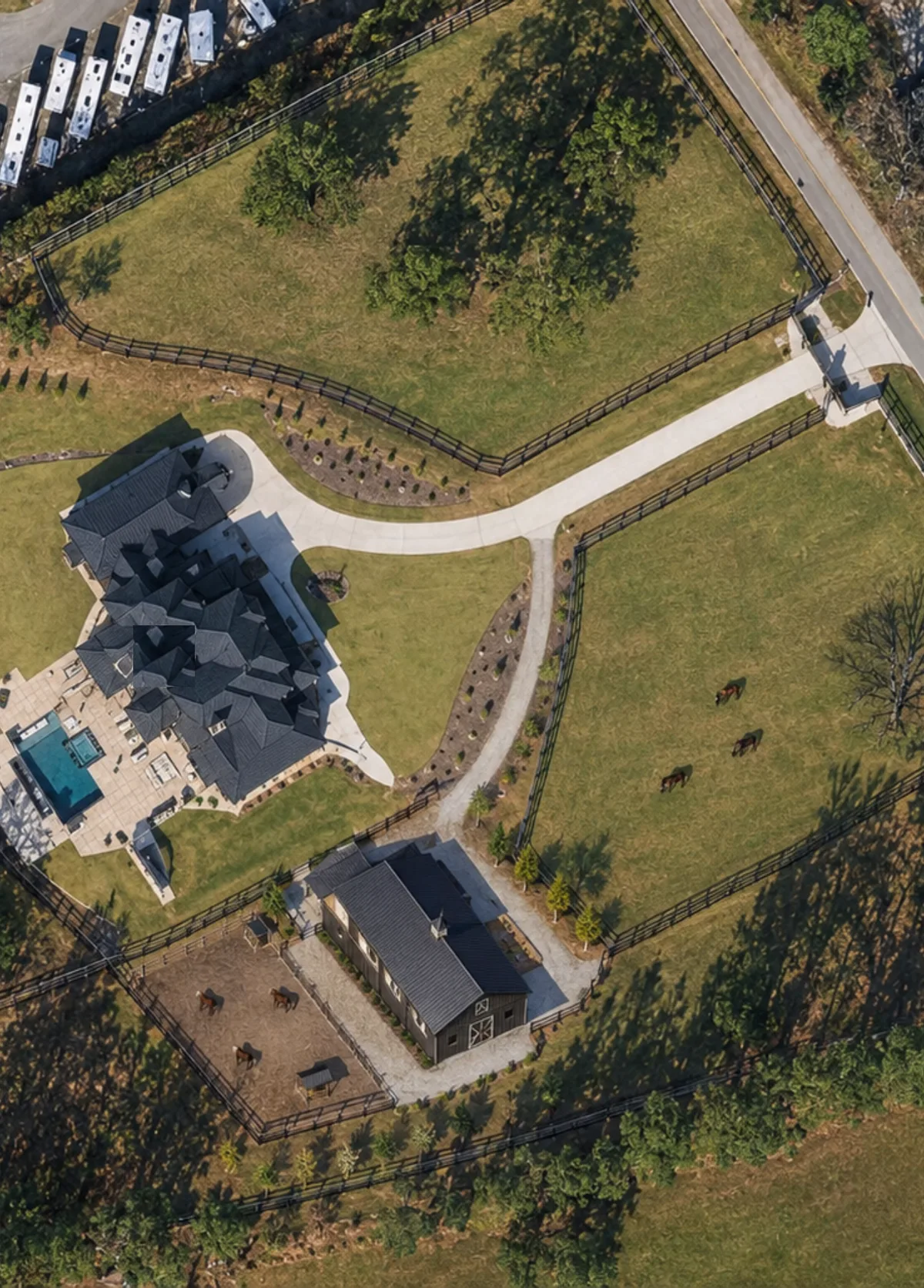
Our farm at 5750 Holiday Rd in Buford — the barn, the board-fenced pastures, and the turnout, shot from the air so you can see the whole layout before you visit.
How the split usually works
Most partial-care agreements divide along one of three lines: feeding, stall work, or turnout. A common version is that we handle morning feed and turnout every day, and you handle evening feed and stall cleaning on the days you are out, with us covering the days you are not.
Another version keeps all the daily care with us and takes bedding, grain, and hay out of the board price so you supply your own. That suits owners with a particular feed program they will not change.
Whatever the split, we put it in writing: who does what, on which days, by what time, and who covers when someone cannot make it. Then nobody is guessing.
What partial care saves — and what it costs you
The savings are real, and so is the obligation. Partial care ties you to the barn on a schedule. Vacations, a sick week, a work trip, or a snowed-in Tuesday all need a plan in advance, usually a paid fill-in from us or a swap with another boarder.
Add up your actual drive time before you decide. If you are coming from Gainesville or Cumming in evening traffic, a nightly obligation is a bigger commitment than it sounds like in January when you are signing the contract.
Who partial care suits best
Riders with flexible schedules, retirees, work-from-home owners, and people who genuinely like barn work. It also fits families where a teenager is learning horsemanship and the daily routine is part of the point.
It is a poor fit for owners with unpredictable travel, for horses needing timed medication, and for anyone whose horse needs specialized handling that only one person in the arrangement can do. In those cases full care is the safer choice.
Safety rules that stay with us either way
Some things do not get split. Fence and gate integrity, water availability, pasture management, and the emergency call chain stay our responsibility on every board type. If a horse is in trouble at 2 a.m., nobody is checking a chore chart.
We also keep a standing rule that any change to feed, turnout, or medication goes through both sides before it happens. That single rule prevents most of the problems partial-care barns run into.
Ask about a partial-care spot
Tell us your realistic weekly schedule — not your best week, your average one. We will build a split around it and tell you what it costs. If it turns out full care is the better call for your situation, we will say so.
Call or text 404-738-6120, or send the details through our contact page. We serve owners in Gwinnett, Hall, and Forsyth County.
Frequently asked questions
What happens if I cannot make it out on my day?
You call us and we cover it, usually for a small fill-in fee agreed in advance. What you never do is skip it and hope — that is the one thing partial care cannot absorb.
Is partial care cheaper than pasture board?
Not always. Pasture board is usually the lowest-cost option because the horse lives out and there is no stall to maintain. Compare both against your horse’s needs, not just the monthly number.
Can I switch to full care later?
Yes, and people do — usually when a job changes or winter sets in. Board type is not a life sentence.
Where we offer partial-care boarding
Available to horse owners across Gwinnett County, Hall County, and Forsyth County, plus the wider Atlanta metro.
Other services
- Full-Care Boarding — Daily feeding, turnout, stall cleaning, and hands-on monitoring — everything handled for you.
- Pasture Board — 24/7 turnout with shelter, hay, and water for horses that do better living out.
- Stall Board — A dedicated stall with daily turnout for horses in work or on a managed routine.
- Retirement Board — Quiet, low-stress care for senior and pasture-sound horses stepping out of work.
Still deciding? Our boarding FAQ covers the questions owners ask most, and about us explains how we work.