Horse Training in North Georgia
Most training calls we get are not about advanced movements. They are about a horse who will not stand for the farrier, who drags his owner to the gate, who will not load, or who was started three years ago and then sat in a field. Those are ordinary problems, and they are fixable with time and consistency rather than gadgets.
Training is also not something you buy once. A horse holds what he practices, which means the owner has to be part of the program or the work quietly unwinds after the horse comes home.
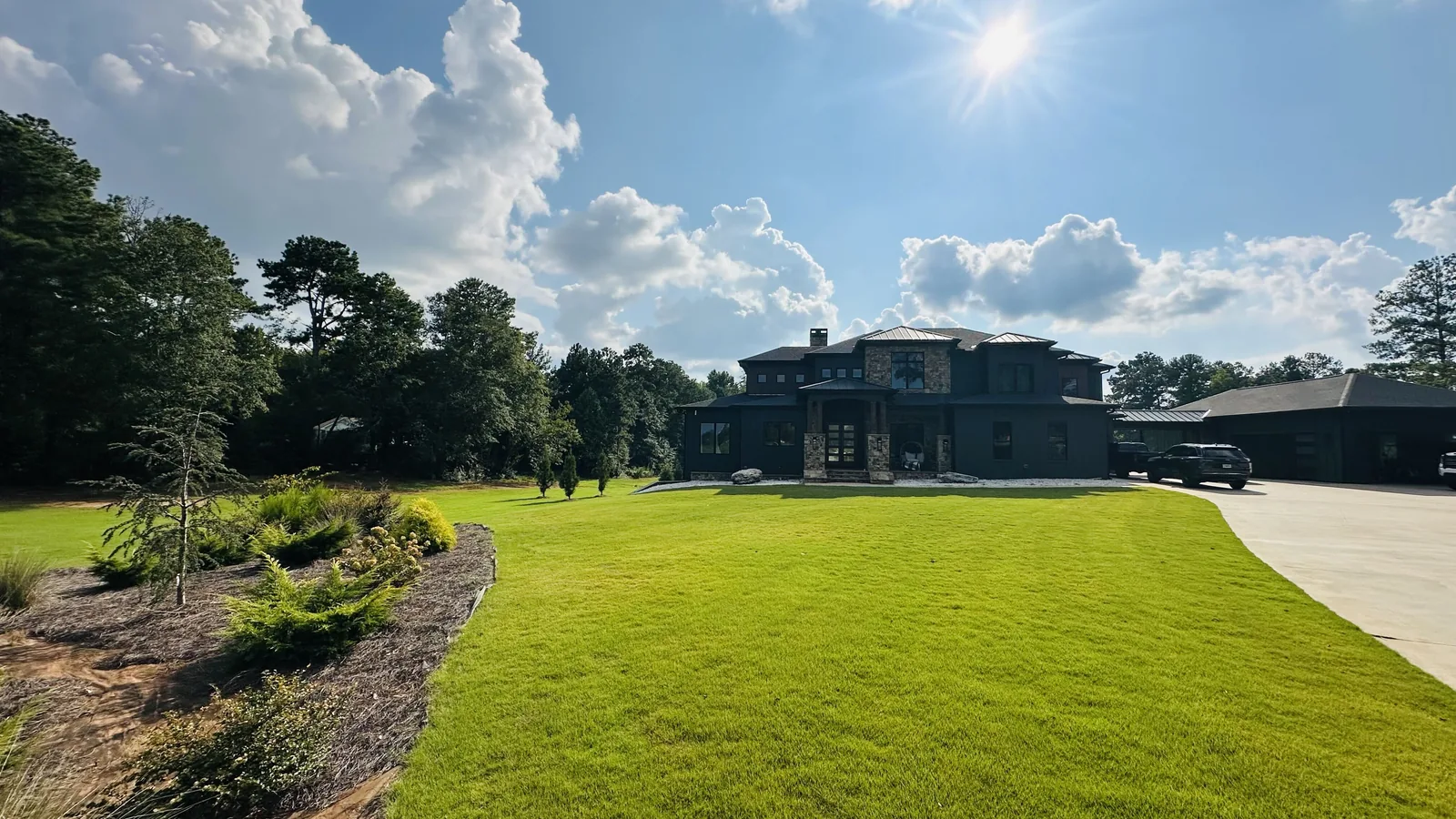
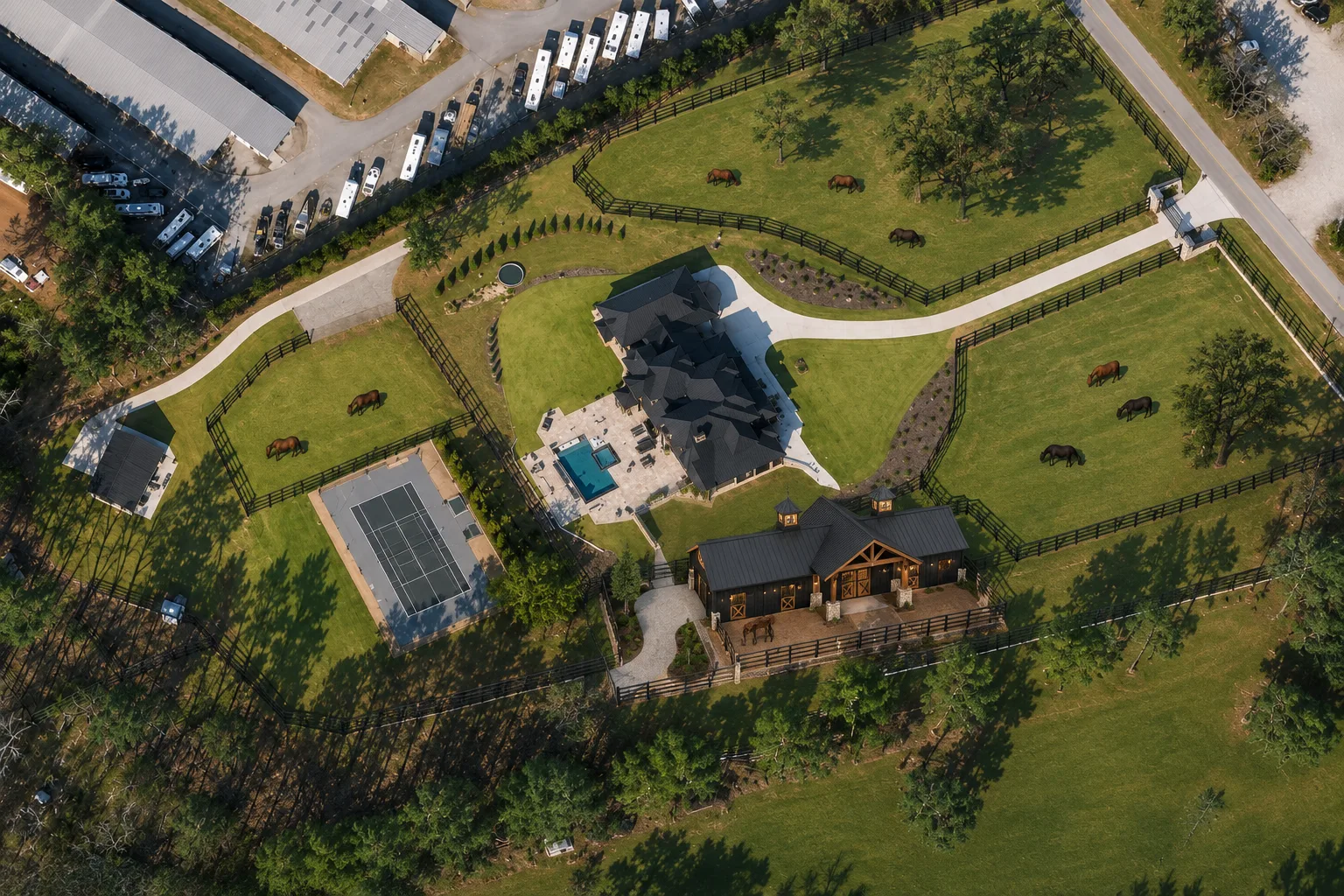
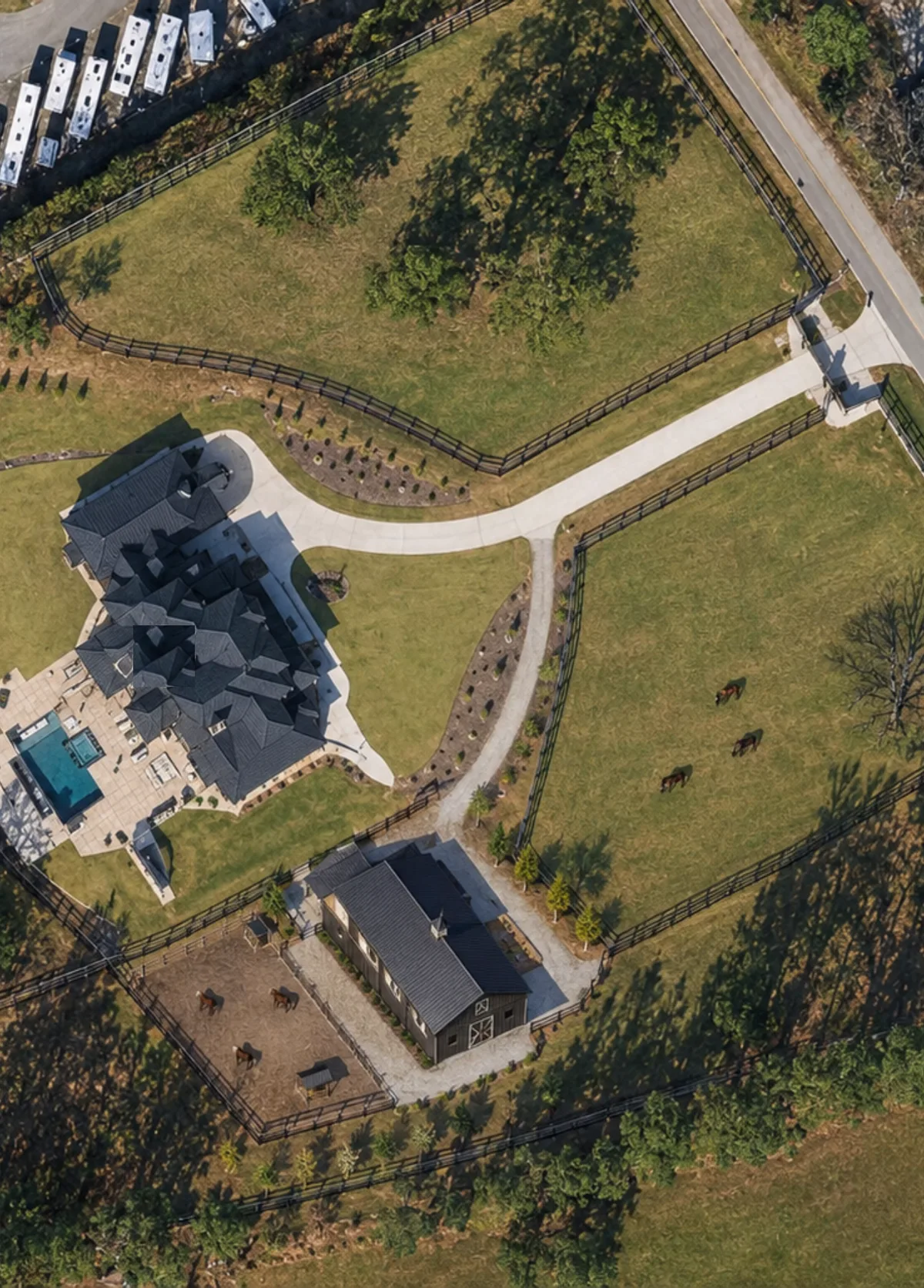
The barn and property your horse would live on
Our farm at 5750 Holiday Rd in Buford — the barn, the board-fenced pastures, and the turnout, shot from the air so you can see the whole layout before you visit.
Groundwork and handling
Before anything under saddle, a horse should lead without pulling, stop when you stop, yield hindquarters and shoulders, pick up all four feet, stand tied, tolerate clippers and spray, load in a trailer, and stand still for the vet.
Those skills are worth more to a normal horse owner than any ridden skill. They are what makes an emergency manageable at 10 p.m. and what makes your farrier want to keep your business.
Restarts and horses with time off
A horse coming back after a year in a field is not the same horse who went out. Fitness is gone, balance is rusty, and old habits reassert themselves. Restarts go slow on purpose: groundwork first, then tack and long-lining, then short rides that end while the horse is still relaxed.
The same approach applies to horses coming off an injury — in coordination with your vet’s rehab plan, never ahead of it.
Problem behavior is usually pain, fear, or confusion
Before labeling a horse stubborn, we rule out the ordinary causes: an ill-fitting saddle, ulcers, hocks, teeth, feet, or a rider cue that means two different things on two different days. A surprising share of "attitude" problems disappear after a saddle fitter or a dental float.
When a horse genuinely needs behavior work, the answer is clear, repeatable cues and releasing pressure at the exact moment the horse tries — not escalation.
Owner involvement
Training sessions are more useful when you watch some of them. Whatever the horse learns, you need to be able to ask for the same thing the same way, or the horse gets a mixed message the week he goes home.
For owners who want to build their own skills alongside the horse, riding lessons are the natural pairing. Horses in training are typically on stall board or full care so the routine stays consistent.
Talk about your horse
Every training conversation starts with an honest description: age, history, what he does well, what has gone wrong, and what you actually want to do with him. Call 404-738-6120 or send us the details. If what you need is outside what we do, we will tell you and point you toward someone who does it.
Frequently asked questions
How long does training take?
It depends entirely on the horse and the goal. Basic handling issues often improve in weeks; restarting a horse under saddle is a months-long process. Anyone promising a fixed timeline before meeting your horse is guessing.
Do you use any particular method?
Pressure and release, consistency, and no shortcuts. We are happy to explain exactly what we are doing and why at any point.
Can you train my horse at my barn?
Ask us — it depends on distance and the facility. Call 404-738-6120 and we will give you a straight answer.
Where we offer horse training
Available to horse owners across Gwinnett County, Hall County, and Forsyth County, plus the wider Atlanta metro.
Other services
- Full-Care Boarding — Daily feeding, turnout, stall cleaning, and hands-on monitoring — everything handled for you.
- Partial-Care Boarding — You keep a hands-on routine and split daily chores; we cover the rest at a lower monthly rate.
- Pasture Board — 24/7 turnout with shelter, hay, and water for horses that do better living out.
- Stall Board — A dedicated stall with daily turnout for horses in work or on a managed routine.
Still deciding? Our boarding FAQ covers the questions owners ask most, and about us explains how we work.