Riding Lessons for New and Returning Riders
Two kinds of people call about lessons. Beginners — often a parent whose child has wanted this for two years — and adults getting back on after a decade or two away, sometimes after a fall that stayed with them. Both need the same thing at the start: unhurried, safe instruction on a sensible horse.
Nobody learns to ride in an hour, and nobody learns to ride from someone shouting. Progress comes from repetition, correct position, and a horse that gives honest feedback.
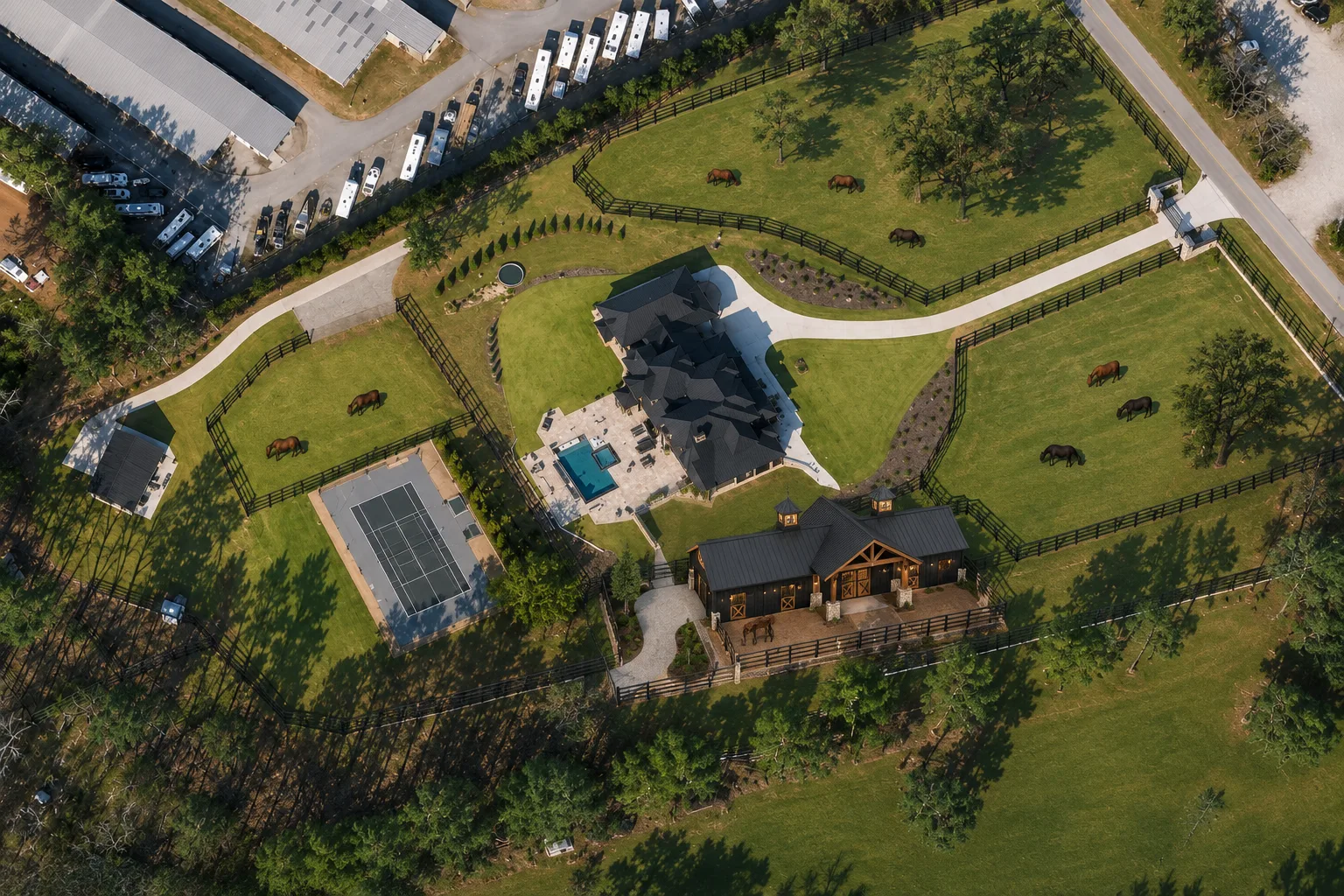
The barn and property your horse would live on
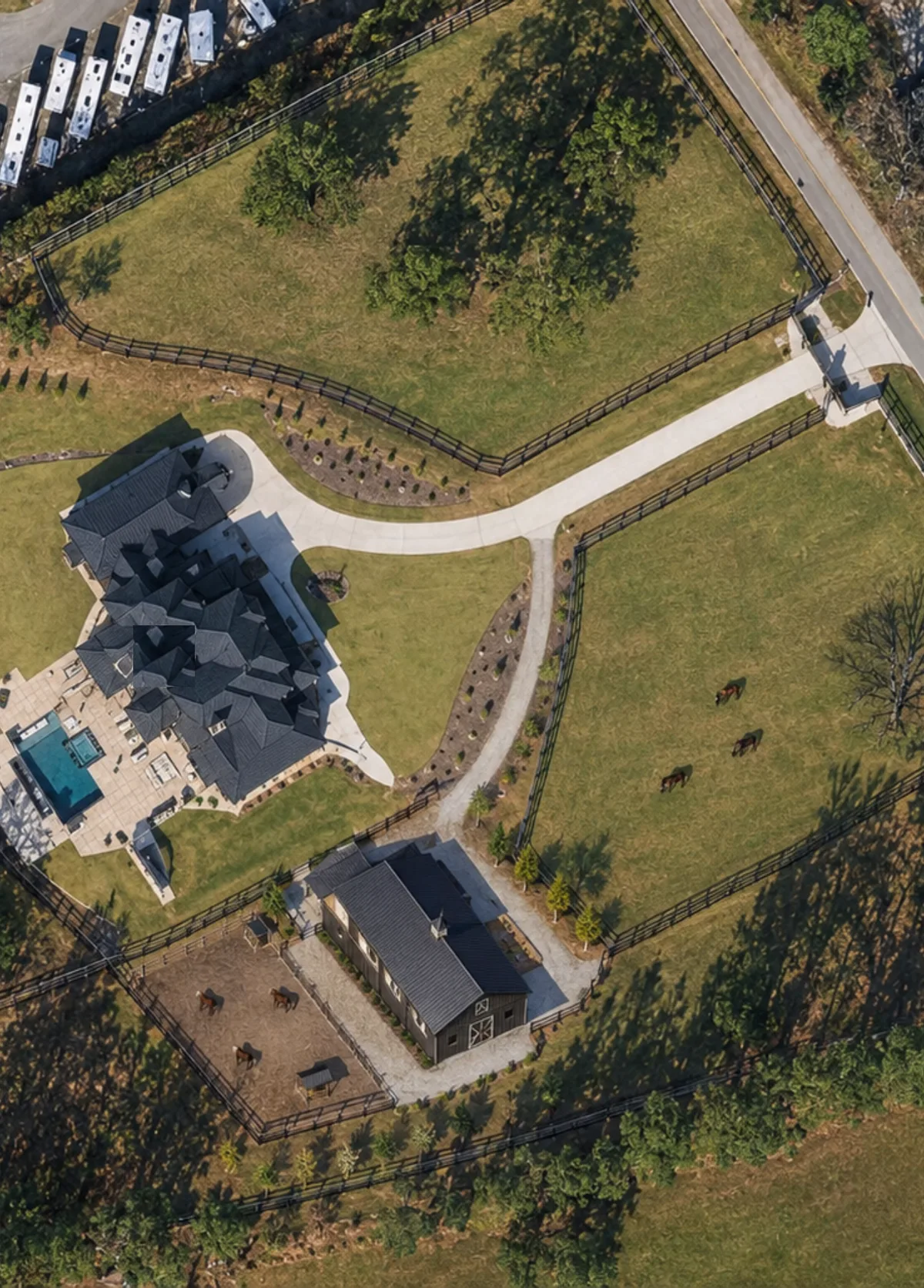
Our farm at 5750 Holiday Rd in Buford — the barn, the board-fenced pastures, and the turnout, shot from the air so you can see the whole layout before you visit.
What a first lesson looks like
It starts on the ground. How to approach a horse, where not to stand, how to lead, how to groom and tack up, and how to read what a horse is telling you with his ears, head, and feet. That part is not filler — it is the difference between a rider and a passenger.
Then mounting, position, and steering at a walk. Most first lessons stay at the walk, and that is exactly right. Balance comes first, speed later.
Adults coming back to riding
Returning adult riders often ride better than they think and trust themselves less than they should. The muscle memory is usually still there; the confidence is what needs rebuilding, particularly after a fall.
That means going at your pace, being explicit about what will happen next, and never being talked into something you are not ready for. Fear is information, not a character flaw.
Kids and horsemanship
For young riders, the horsemanship matters as much as the riding. Kids who learn to catch, groom, pick feet, and put equipment away properly become safe, capable horse people. Kids who only ever get handed a tacked-up pony do not.
Helmets are non-negotiable, boots with a heel are required, and lesson length is matched to attention span rather than to the clock.
How lessons fit with boarding
You do not have to own a horse to take lessons, and you do not have to take lessons to board. But they work well together — owners on full care or stall board often add regular lessons, and lesson riders who eventually buy a horse already know what boarding involves.
If your horse needs work you cannot put on him yourself, ask about training alongside your lessons.
Ask about lesson availability
Tell us who is riding, their age, any prior experience, and what you are hoping to get out of it. Call or text 404-738-6120, or use the contact form. We work with riders from Lawrenceville, Buford, Cumming, Gainesville, and across the north metro.
Frequently asked questions
Do I need my own horse or equipment?
No horse needed to start. Wear long pants and boots with a heel; we will talk you through helmets before your first lesson.
How old does a child need to be?
It depends more on attention span and confidence than birthday. Call and describe your child and we will be honest about whether it is the right time.
I am nervous — is that normal?
Completely. Most adult beginners are. A good lesson respects that instead of pushing through it.
Where we offer riding lessons
Available to horse owners across Gwinnett County, Hall County, and Forsyth County, plus the wider Atlanta metro.
Other services
- Full-Care Boarding — Daily feeding, turnout, stall cleaning, and hands-on monitoring — everything handled for you.
- Partial-Care Boarding — You keep a hands-on routine and split daily chores; we cover the rest at a lower monthly rate.
- Pasture Board — 24/7 turnout with shelter, hay, and water for horses that do better living out.
- Stall Board — A dedicated stall with daily turnout for horses in work or on a managed routine.
Still deciding? Our boarding FAQ covers the questions owners ask most, and about us explains how we work.