Retirement Board for Senior Horses
Retiring a horse is not the same as boarding one. The goals change. Nobody is worried about arena footing or a show schedule anymore — the questions become whether he is holding weight through winter, whether his teeth are still doing their job, whether he can get away from a pushy pasture mate, and whether he is comfortable.
It is also, for most owners, an emotional decision made after ten or fifteen years with the same animal. You want to know the person feeding him actually looks at him.
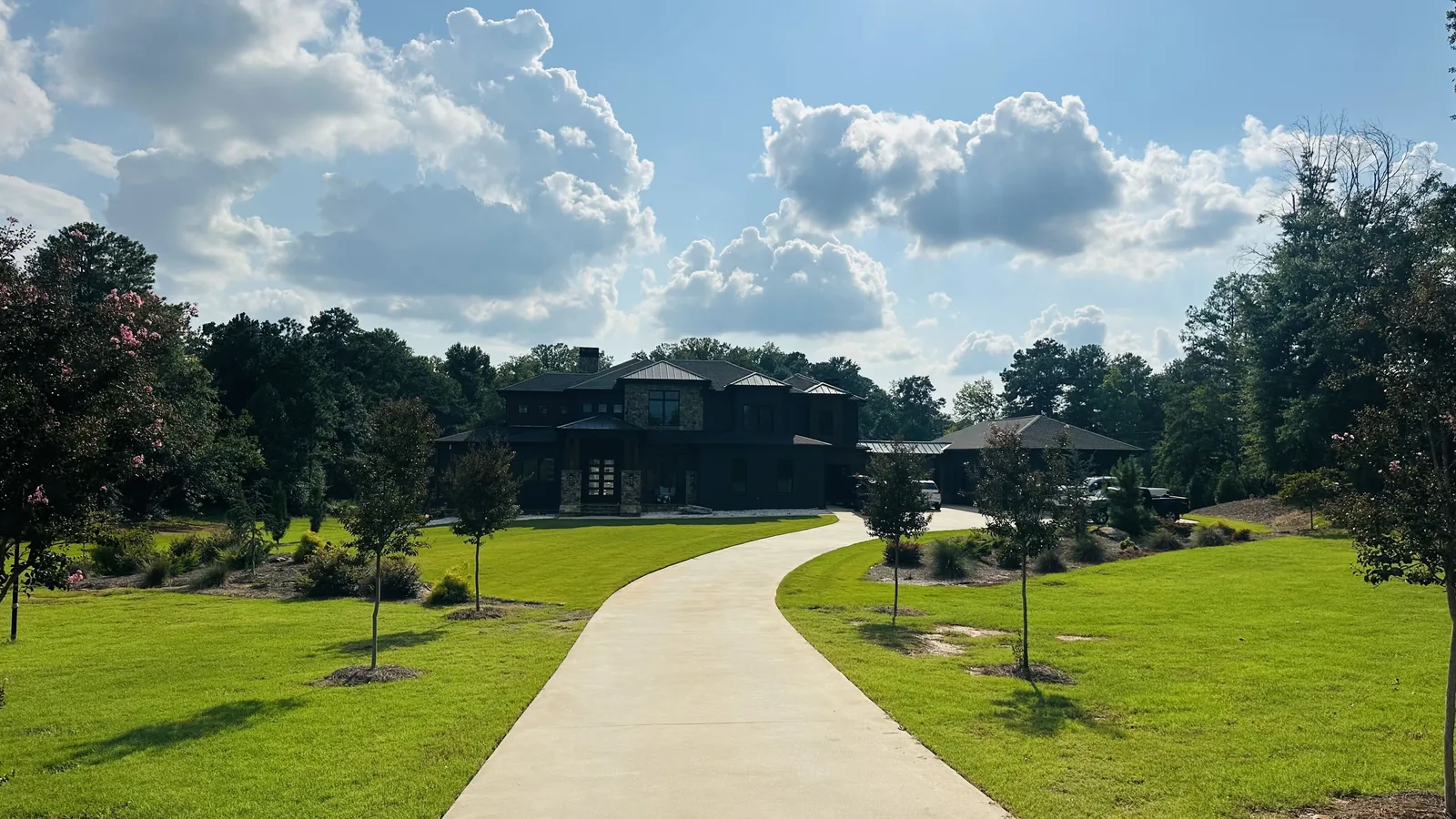
The barn and property your horse would live on
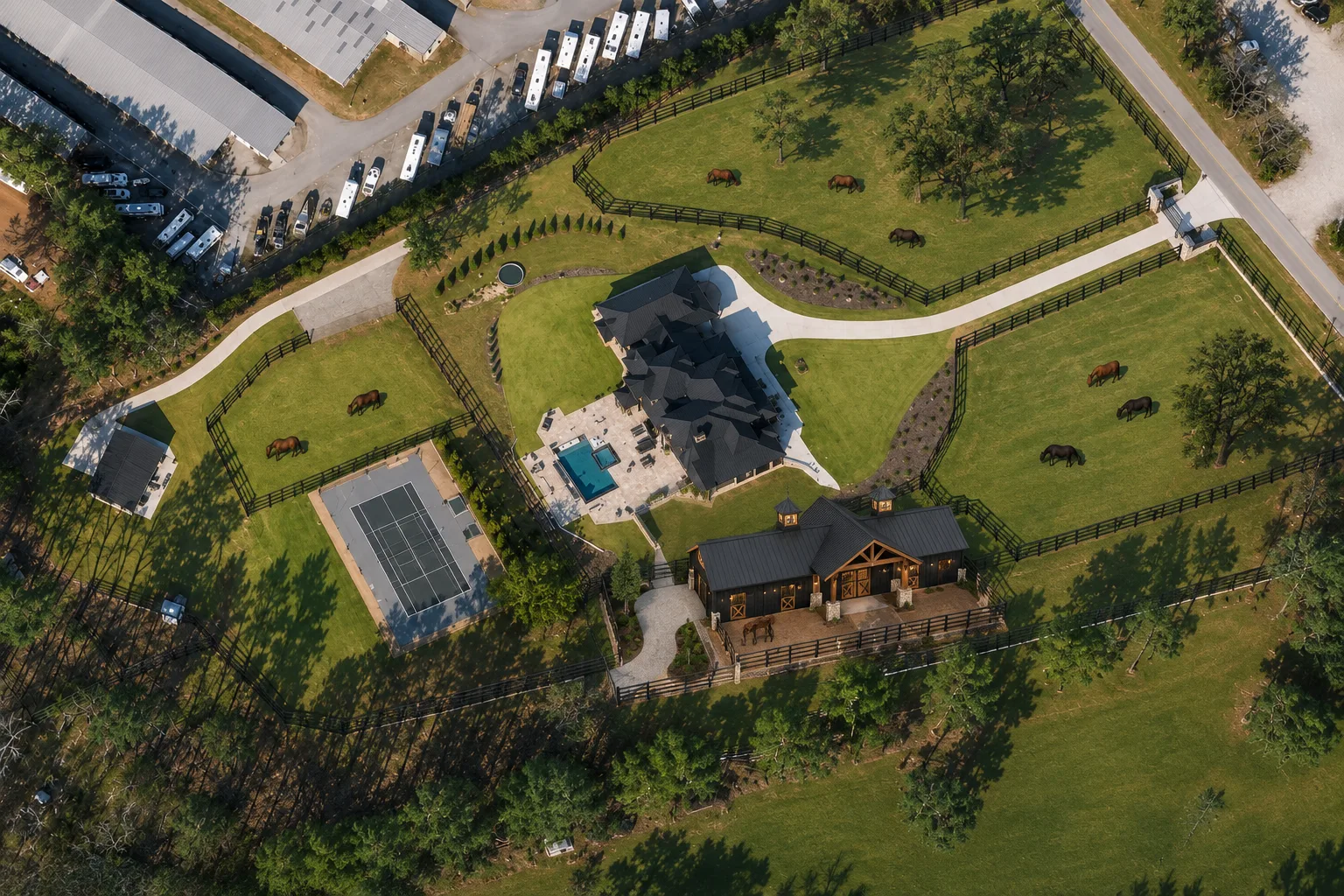
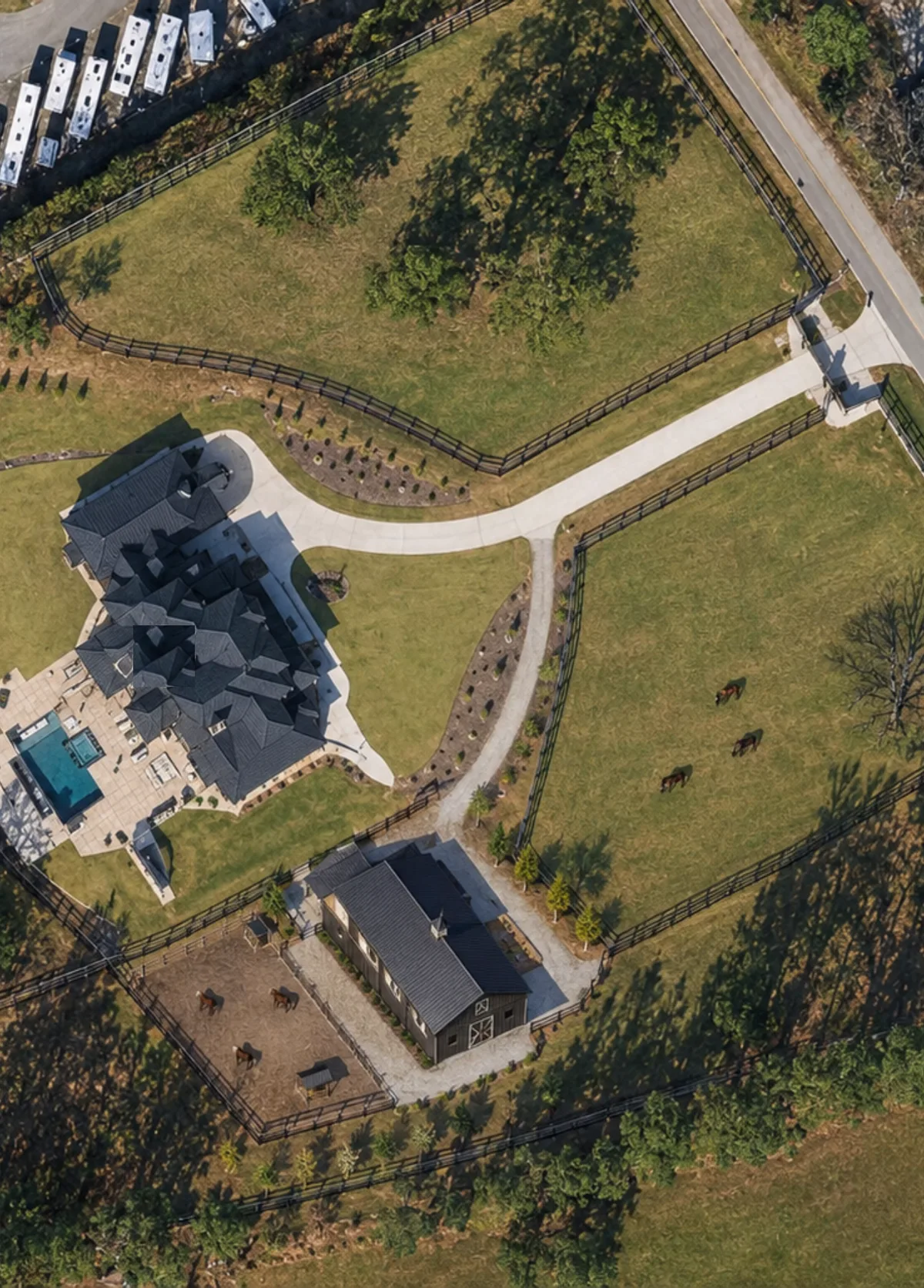
Our farm at 5750 Holiday Rd in Buford — the barn, the board-fenced pastures, and the turnout, shot from the air so you can see the whole layout before you visit.
What retirement board covers
Daily turnout in a quiet field with companions matched for age and temperament. A feed program built for a senior horse, including soaked feed where teeth or choke risk require it. Hay availability year-round, since older horses lose ground fast when grass thins out.
Weight monitoring you actually hear about, blanketing for horses who need it, coordination with your vet and farrier for routine care, and a daily check for the small things — a swollen eye, a shifted gait, hesitation at the water trough — that tell you something has changed.
Why quiet turnout matters for old horses
The main risk to a retired horse in a group is not disease, it is competition. An arthritic 24-year-old who cannot hold his place at a round bale will drop weight through February while looking fine from the road in October.
That is why retirement horses go out with peers rather than into a young, boisterous herd, and why hay gets fed in multiple places instead of one contested pile. It is a small management decision with a large outcome.
Senior feed, teeth, and winter
Most senior weight problems trace back to dentition. A horse whose molars are worn or missing cannot process long-stem hay properly, no matter how much you put in front of him, and he will quietly starve on a full field. The fix is usually soaked hay pellets or a complete senior feed, plus a real dental exam on schedule.
Winter is the pressure test. Georgia winters are mild, but a wet 38-degree week is harder on a thin old horse than a dry 20-degree one. Blankets, extra forage, and shelter close the gap.
Honest communication about decline
Retirement boarding involves conversations most barns avoid. If your horse is losing condition, struggling to rise, or in visible pain, you deserve to hear it early and plainly, with photos, so you can involve your vet and make decisions on your own timeline instead of getting a phone call after a crisis.
We would rather send you an update you did not want than let you find out late.
Ask about retirement space
Tell us your horse’s age, history, current weight and body condition, dental status, medications, and how he handles a herd. Call 404-738-6120 or use our contact form. We serve owners across Gwinnett, Hall, and Forsyth County, and can haul him in when the time comes.
Frequently asked questions
Can I still visit my retired horse?
Absolutely, as often as you like. Retirement board is not a goodbye.
Do you handle medications and supplements?
Yes — daily medications and supplements are given as prescribed, and we coordinate with your vet.
What if my horse can no longer be in a group?
Then he goes out in a smaller setting with a quiet companion or on his own with a neighbor over the fence. Comfort decides the arrangement.
Where we offer retirement board
Available to horse owners across Gwinnett County, Hall County, and Forsyth County, plus the wider Atlanta metro.
Other services
- Full-Care Boarding — Daily feeding, turnout, stall cleaning, and hands-on monitoring — everything handled for you.
- Partial-Care Boarding — You keep a hands-on routine and split daily chores; we cover the rest at a lower monthly rate.
- Pasture Board — 24/7 turnout with shelter, hay, and water for horses that do better living out.
- Stall Board — A dedicated stall with daily turnout for horses in work or on a managed routine.
Still deciding? Our boarding FAQ covers the questions owners ask most, and about us explains how we work.